
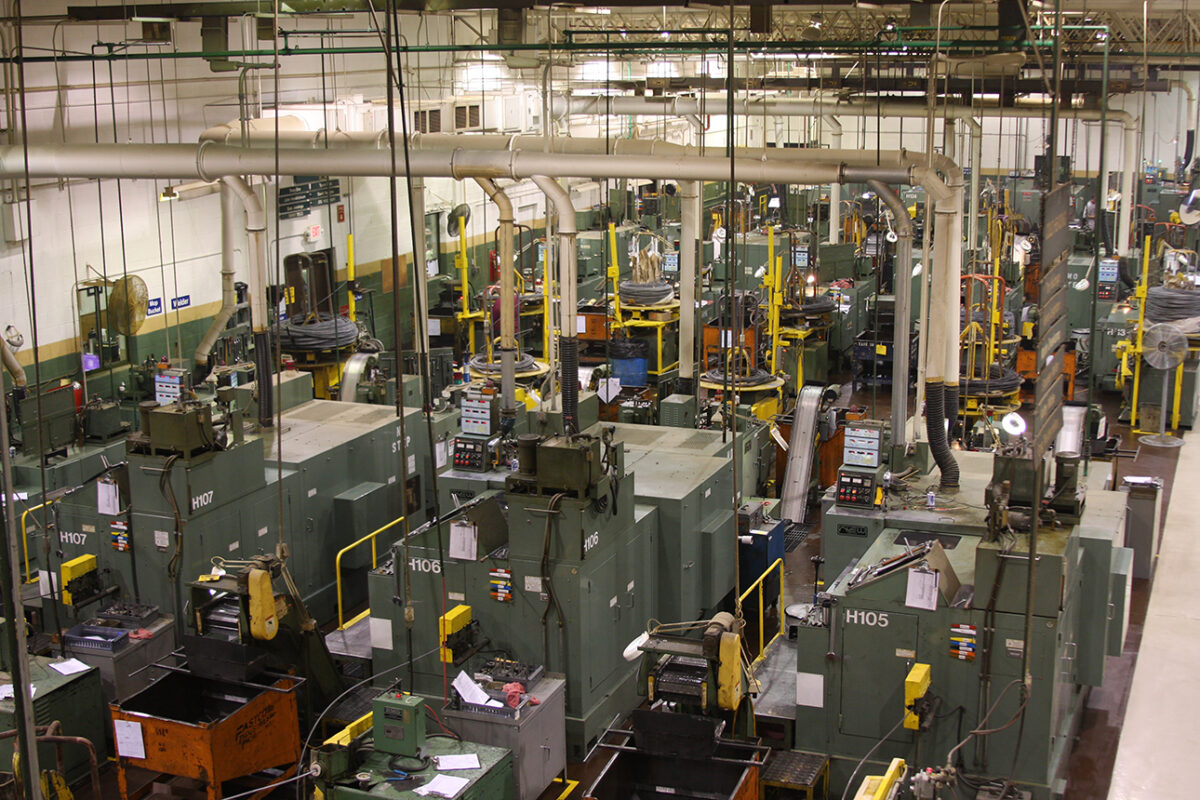
It might seem basic: cold forming is when parts are formed “cold.” In other words, the metal is room temperature when the parts start the forming process. It is a high-speed and high-pressure forging process in which a coil of wire material is fed into a machine and progressively formed into shape with dies and punches or blows.
The Process – Progressive Forming
Cold forming uses a process known as progressive forming to gradually develop the part from a slug (a section of material cut from the coil of material) to its final shape, or close to it. The forming progressions are different for every part. The more complex a part, the more steps in the process. Likewise, the harder the material, the more blows may be necessary to reach the final shape. Fastco has a great deal of experience working with harder-to-form materials such as stainless steel and high-nickel alloys.
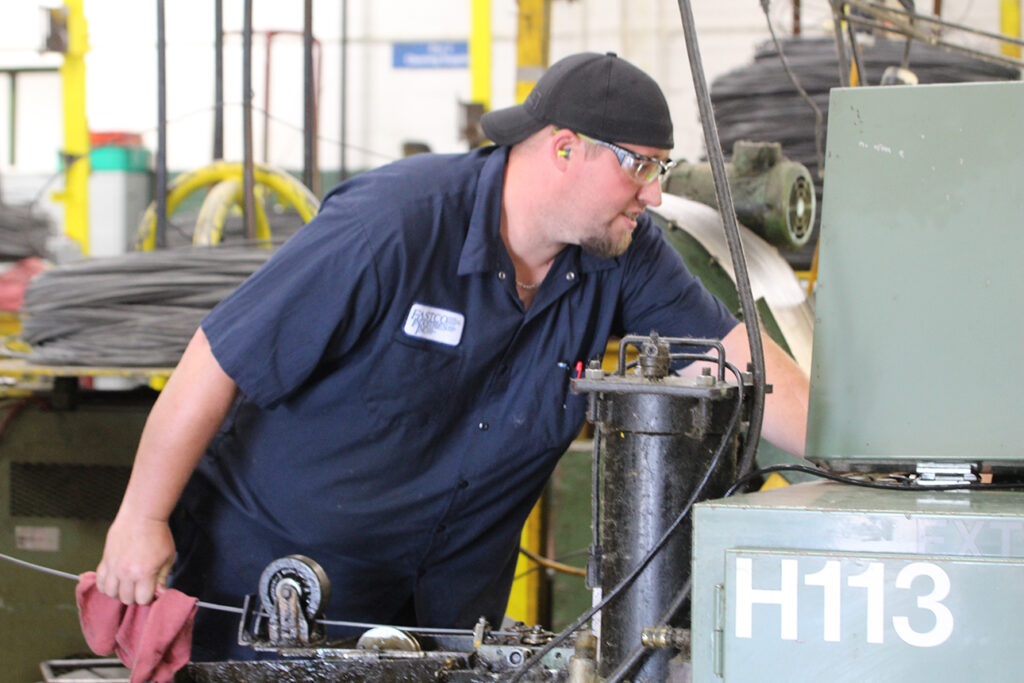
Common forming techniques include upsets and extrusions. Upsets involve reducing the slug in height and increasing the starting diameter. There are two types of extrusions. Forward extrusion is when the material is forced through a small diameter hole in order to reduce diameter and increase length. Forcing the material around a punch/pin to form a hole in the part is known as backward extrusion.
The Benefits of Cold Forming
Using speed and pressure to form parts has many benefits. There is very little scrap in the process, as it involves shaping the metal, not cutting, shaving, or drilling it like screw machining, which can lead to almost 60% metal waste. In addition, the process is efficient and cost effective when manufacturing bulk quantities. At Fastco, we consider “bulk quantity” to mean over 50,000 parts, although this varies depending on the size and complexity of the part.
Cold headed parts are also harder and stronger than hot forged parts. Parts formed by cold heading have a better surface finish, sometimes requiring no finishing work at all. While the process cannot meet the tight tolerances of precision machining, cold heading is still more precise than hot forging with dependable and reproducible results.
What Cold Forming Can Make
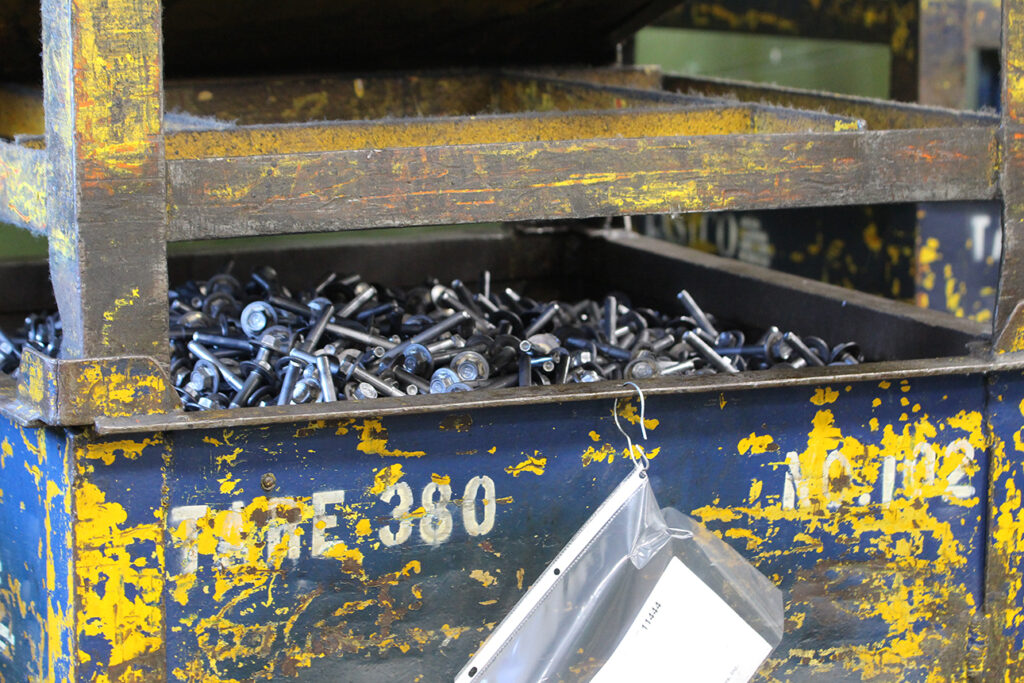
A wide variety of fasteners can be cold formed, including screws, rivets, pins, bolts, bushings, and nuts. Whether or not a part is formable for Fastco specifically depends on several factors.
At Fastco, our machines form male fasteners, meaning nuts are outside of our capabilities. We do have the capacity to make some bushings and semi-tubular parts, depending on the dimensions.
Formable or Not?
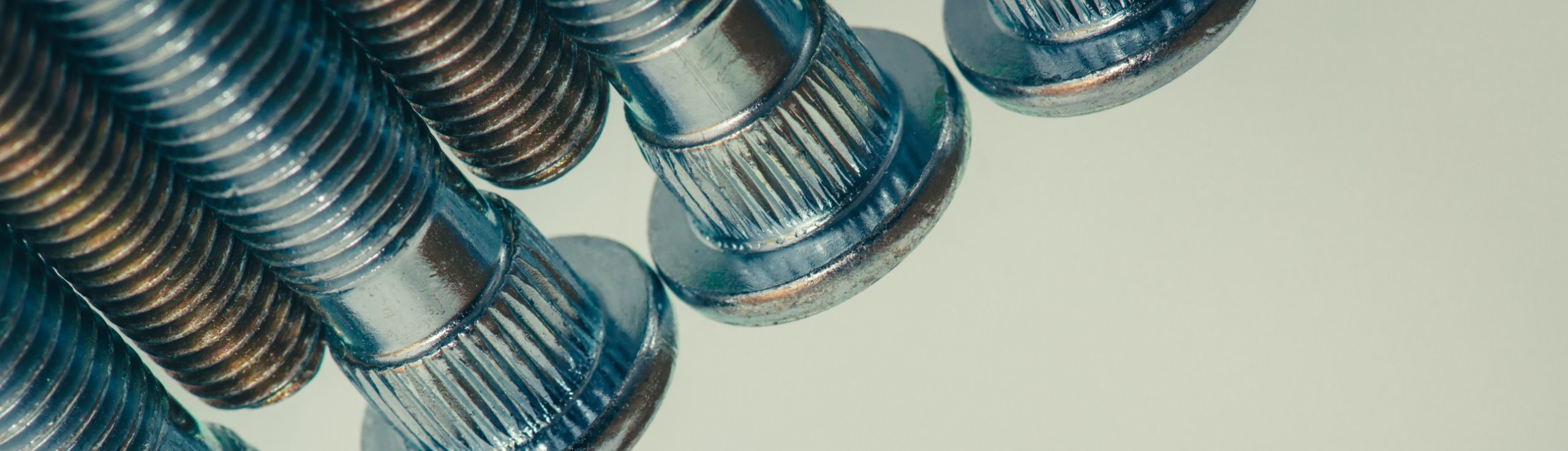
The type of material, tolerance scheme and the features of the part matter. Some parts might be formable out of carbon steel, which is easier to manipulate, but not feasible with stainless steel. There are also certain features that are not able to be performed with cold heading, such as holes through the side of a part. Fastco does have the ability to send out for outside machining operations such as grinding, turning, and drilling and tapping. In addition, we have a thread rolling department capable of adding threads, knurls, fetters, points, and grooves to cold formed parts.
The size of a part matters, too. For example, our diameter range is between 3mm and 18mm; we would not be able to form parts that are outside of that diameter range. Within those limits, not every cold forming machine that we have has the same range. Our larger machines typically handle our bigger and/or more complex parts. A really small, complex part might not be big enough to run on a larger machine.
That’s why we always want to see component prints and to hear from you about the functionality of the part. Knowing what you need the fastener to do can help us determine if a tweak to the diameter, a different material, or a tolerance adjustment will make this a feasible part for us that will function just as well, if not better, for you.